
Government Accelerates Road Infrastructure Development to Transform Connectivity and Economic Growth
The Government is accelerating the expansion and modernisation of Kenya’s road infrastructure to enhance seamless connectivity, reduce transport costs and stimulate economic growth across the country.
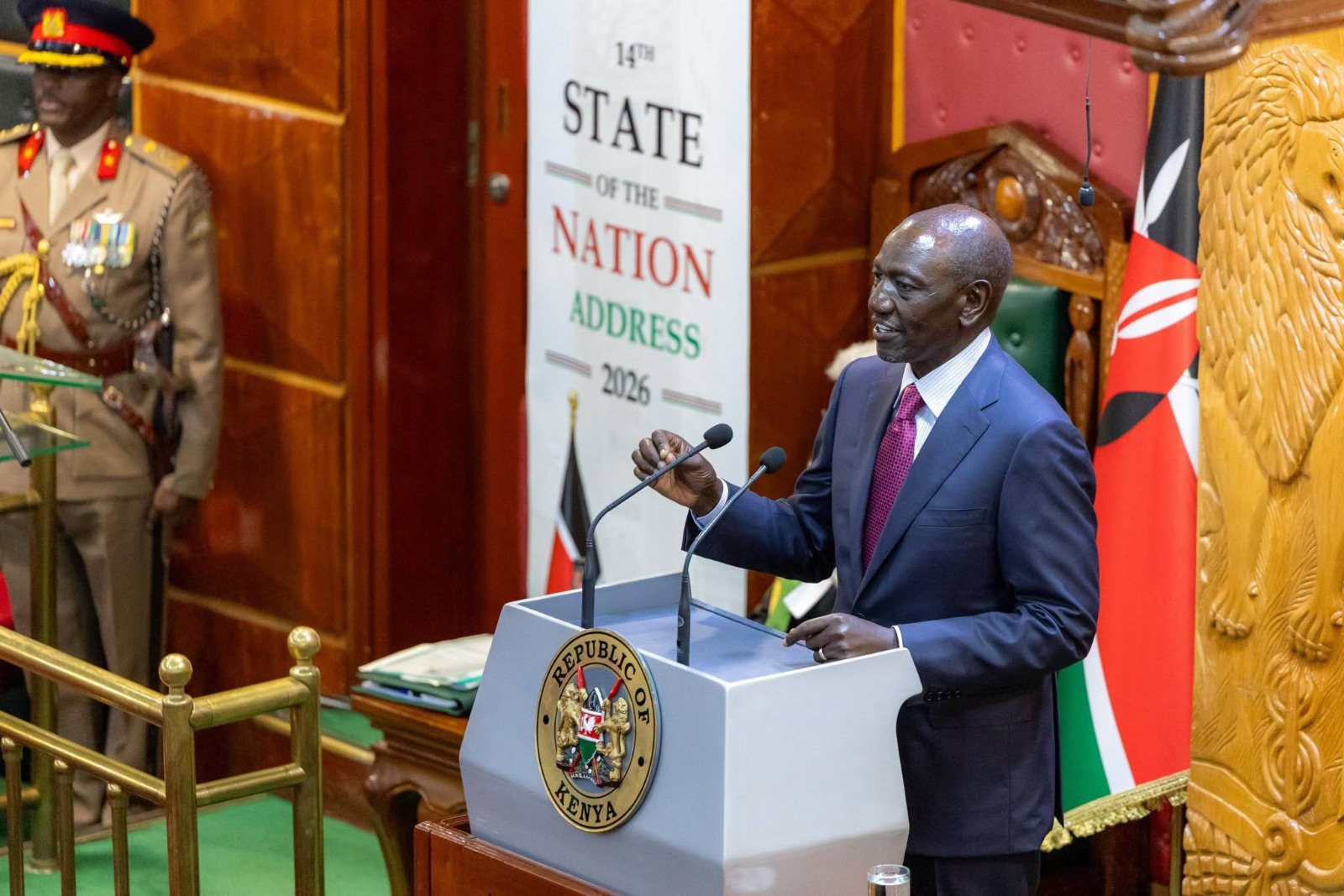
In his State of the Nation Address delivered on 18th November 2026, H.E. President William Samoei Ruto announced that approximately 7,000 kilometres of roads are currently under construction, including previously stalled projects.
The President outlined an ambitious plan to tarmac 28,000 kilometres of roads and dual 2,500 kilometres of highways over the next decade, aimed at transforming Kenya’s transport network, improving mobility and strengthening regional competitiveness.
Among the flagship projects highlighted is the over 750-kilometre Isiolo–Wajir–Mandera Corridor, also known as the Northern Kenya Gateway Corridor, traversing Modogashe, Wajir, El Wak and Rhamu.
The strategic corridor is expected to significantly improve connectivity in Northern Kenya, facilitate cross-border trade, attract investment and enhance access to essential public services.
The Government is also advancing the 700-kilometre Mau Mau Roads Programme, the Kenol–Marua Dual Carriageway and the Lake Victoria Ring Road, which will strengthen connectivity among economic centres in Busia, Siaya, Kisumu, Homa Bay and Migori counties.
Other major infrastructure projects highlighted include the Rironi–Naivasha–Nakuru–Mau Summit Highway, the Kamandura–Maai Mahiu–Naivasha Road and the proposed dualling of the Nairobi–Mombasa Highway, for which implementation arrangements are at an advanced stage.
Additional strategic corridors include the Mau Summit–Kericho–Kisii–Awendo–Kisumu Road, Kisumu–Busia Road and Mau Summit–Eldoret–Malaba Road.
The Government is further prioritising the dualling of key road corridors, including Bomas–Ongata Rongai–Ngong–Karen, Kitengela–Isinya, Pangani–Muthaiga–Ndumberi, Makutano–Embu–Chuka–Maua, Marua–Nanyuki–Isiolo, Malindi–Mtwapa and Likoni–Ukunda–Msambweni–Lunga Lunga.
Construction of the Nithi Bridge is also progressing as part of efforts to improve road safety, strengthen critical infrastructure and enhance connectivity.
To support these investments, the Government has established the National Infrastructure Fund, with a stated capitalisation of KSh340 billion, to mobilise financing for strategic infrastructure development.
The President emphasised the importance of an integrated transport system in which roads, railways, ports and airports complement one another to reduce logistics costs, facilitate trade and strengthen Kenya’s competitiveness in regional and international markets.
Beyond infrastructure expansion, these investments are expected to deliver tangible socioeconomic benefits by connecting farmers to markets, improving access to healthcare and education, facilitating trade and creating opportunities for employment and investment.
The State Department for Roads, working through its implementing agencies, remains committed to advancing the Government’s infrastructure development agenda through the construction, rehabilitation, upgrading and modernisation of the national road network.
These interventions will continue to strengthen seamless connectivity, promote equitable access to economic opportunities and support Kenya’s long-term socioeconomic transformation.
#SeamlessConnectivity | #InfrastructureDevelopment | #BeyondtheHighway