
Propelling the Economy: Roads as a Driver Towards Growth and Prosperity
Road infrastructure remains one of the most powerful catalysts for economic growth and social transformation. In Kenya, roads serve as lifelines that connect communities, link farmers to markets, and enable the efficient movement of goods and people across the country. Beyond transportation, road networks play a central role in supporting trade, improving access to essential services, and opening up regions for investment and development.
According to the Central Bank of Kenya Agriculture Sector Survey 2025, road infrastructure is a critical factor in ensuring the continuous supply of food commodities to markets and reducing post-harvest losses. Similarly, a 2024 study by the Kenya Institute for Public Policy Research and Analysis titled Role of Rural Road Infrastructure on Agricultural Productivity in Kenya found that a 1.0 percent improvement in rural road infrastructure is associated with a 2.9 percent increase in agricultural productivity, while improved road access contributes an additional 1.26 percent boost. These findings demonstrate that efficient road networks not only support trade and agricultural growth but also help stabilize food prices for households.
For many rural communities, roads are therefore not merely transport corridors; they are essential enablers of livelihoods, education, healthcare access, and economic participation. Where roads are improved, farmers are able to transport produce faster, children can access schools more easily, and patients can reach health facilities in time. Roads, in essence, connect people to opportunities.
Despite significant progress in expanding the road network, Kenya still faces major connectivity challenges. Only about 11 percent of the country’s road network is paved, while the majority consists of gravel and earth roads that are often impassable during rainy seasons. This situation limits last-mile connectivity, particularly in rural areas where economic activity heavily depends on agriculture. Poor road conditions increase transportation costs, restrict farmers’ access to markets, and contribute to higher prices of essential commodities for consumers. Improving road infrastructure therefore directly contributes to lowering the cost of goods, enhancing food security, and stimulating productivity in key sectors such as agriculture, which contributes approximately 20 percent of Kenya’s Gross Domestic Product (GDP).
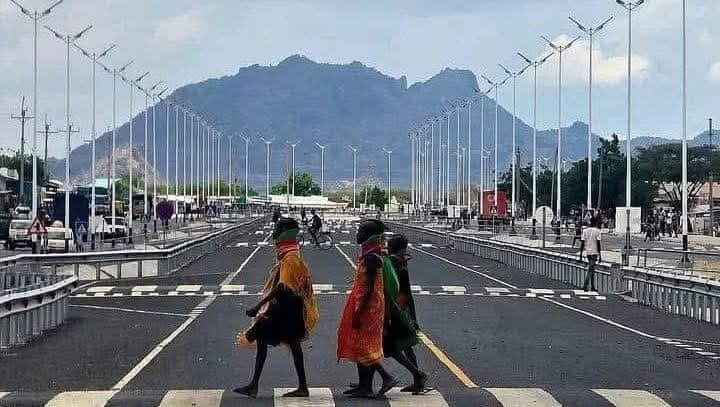
One notable example of how road infrastructure transforms regions is the Eastern Africa Regional Transport, Trade and Development Facilitation Project, funded by the World Bank. The project included the construction of the Kainuk Bridge, the upgrading of the Lokichar–Lodwar–Nadapal highway, and the laying of fibre optic cables from Eldoret to Nadapal. The project significantly transformed the previously isolated northwestern region of Kenya by improving the movement of people and goods along the Eldoret–Nadapal corridor while strengthening connectivity between Kenya and South Sudan.
Travel times and transport costs were reduced, enabling faster movement of agricultural products, livestock, and other goods to markets. The improved road network also stimulated trade and increased the number of transport service providers operating along the corridor, while the fibre optic backbone enhanced digital connectivity and access to online services for communities in Turkana and West Pokot. In addition, the project supported the development of social infrastructure such as schools, health facilities, water and sanitation systems, and trade facilities along the corridor, creating new economic opportunities and improving access to essential services for local communities.
Ultimately, road infrastructure is more than just physical connectivity; it is a foundation for economic growth, regional integration, and social development. Continued investment in roads will play a crucial role in driving Kenya’s economic transformation, improving livelihoods, and supporting inclusive growth across all regions of the country.